Abstract
High blood pressure is a very common health problem, but a lot of people don't even know they have it because it usually doesn't cause any obvious symptoms. This article goes over what hypertension is, what causes it, how it is diagnosed, and some of the ways it can be treated. The main goal is to make hypertension easier to understand for the average person and to show why knowing and managing your blood pressure is so important for your health.
Introduction
High blood pressure (also known as hypertension) is one of the world's most widespread health problems.3 Countless people have high blood pressure without realizing it because it usually does not cause noticeable signs or symptoms, even as it begins to harm the body.1,2 Blood pressure is the amount of force your blood exerts against the walls of your arteries while the heart beats and blood flows. When this pressure remains at an elevated level for too long, the heart and blood vessels must work harder and are put under additional stress. In time, this can increase your risk for health issues like stroke and heart disease.4 The good news is that high blood pressure often can be prevented or controlled with a number of methods, including lifestyle changes and, if necessary, medication. Regular checks can also help detect and monitor high blood pressure.1,2 In this article, we will take a look at what high blood pressure is, what causes it, how doctors measure high blood pressure, and most importantly, how you can protect yourself against developing high blood pressure.
Causes and Risk Factors
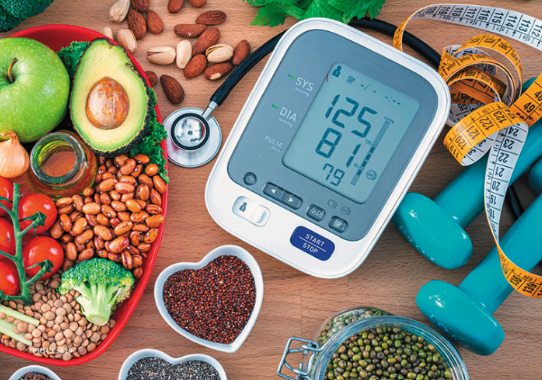
High blood pressure usually does not develop from just one single source. In reality, the condition often develops due to an overlap of several contributing risk factors. Some factors, such as advancing age and a family history of high blood pressure, cannot be mitigated.1,2 Nevertheless, there are many others that can be dealt with. For example, people who consume too much salt, are overweight, smoke, or do not exercise frequently are more likely to develop high blood pressure. Thereby, engaging in regular activity, keeping your weight within a healthy range, eating a healthy diet low in salt, and refraining from smoking can all help keep blood pressure low while also reducing the risk of complications down the line. By understanding the factors that contribute to high blood pressure, many cases can be controlled or prevented before they become a more serious and dangerous problem.1,2 Signs and Symptoms One concern with high blood pressure is that it frequently produces no noticeable signs or symptoms.1,2 This means that somebody can live with high blood pressure and feel entirely fine. Due to this, it’s very important never to rely on symptoms only to determine whether or not your blood pressure is too high. It is suggested that people from ages 18-39 should check their blood pressure once every 2-5 years and people over the age of 40 should check at least once a year. Catching high blood pressure early can allow people to begin managing the condition and reduce their risk of developing chronic health problems down the road.6 Diagnosis Healthcare professionals use a cuff and other blood pressure equipment to check if a person has high blood pressure. When taking blood pressure, two numbers will be recorded. Systolic blood pressure represents the pressure in your arteries when your heart contracts, while diastolic blood pressure represents the pressure in your arteries when your heart relaxes between beats.7 Your healthcare provider may check your blood pressure a few times before diagnosing you with high blood pressure. Blood pressure changes due to many things, such as activity and time of day. Because of these variables, one high blood pressure reading doesn’t necessarily indicate that a person has high blood pressure.8 Blood pressure can also be measured outside of a healthcare setting using a home monitor. Taking measurements consistently at home can reveal a typical pattern and help your doctor determine whether a treatment is working properly.9 Treatment and Management Treatment for high blood pressure is determined by the person's blood pressure readings along with their overall health. Certain individuals may find that modifying their lifestyle is all that is required to lower their blood pressure to a healthy level. Others may need a combination of lifestyle modifications and prescription medication. 1,2 Regardless, managing high blood pressure is likely an ongoing process as opposed to a quick remedy.
One option includes sticking to a healthy diet. Reducing how much salt you consume and following a healthy diet that includes fruits, vegetables, and lean proteins can reduce high blood pressure and help with overall well-being . Consuming too much sodium in food and drink can raise blood pressure levels, and limiting dietary sodium may help keep them in check. You don’t have to remove sodium from your diet entirely, though you should remain aware of the quantity that you are consuming.1,2 People who are physically active tend to have a lower risk of high blood pressure. Aerobic activities, such as jogging, swimming, cycling, and walking, are generally recommended as part of high blood pressure prevention or treatment . Maintaining an appropriate weight may also help, as excess weight can put extra stress on the circulatory system.1,2 Living with High Blood Pressure Receiving a diagnosis of high blood pressure doesn’t automatically suggest that a complete lifestyle change is needed. Often, controlling high blood pressure involves consistent healthy habits over time combined with routine checks of your blood pressure. It's often worthwhile to visit your healthcare provider regularly so they can assess whether your treatment is working effectively.1,2 It is important to note treatment plans may be individualized depending on the person and their situation. Even without experiencing any signs of high blood pressure, it can be difficult to keep up with positive habits. However, managing this condition is important for preventing more serious health concerns down the line because, ultimately, the goal is to minimize the risk of long-term complications, not simply to make a number appear lower.1,2,4 Conclusion High blood pressure is common and can be dangerous, especially because many people do not realize they have it. Over time, uncontrolled hypertension can increase the risk of heart disease, stroke, and other serious health problems. It is also considered one of the leading causes of preventable death worldwide.5 However, hypertension can usually be managed. Regular blood pressure checks, healthy lifestyle choices, and following treatment recommendations can all make a major difference.1,2 Teaching people about high blood pressure and dealing with it early is one of the best ways to protect a person’s long-term health.
References
- Whelton, P. K., Carey, R. M., Aronow, W. S., Casey, D. E., Jr., Collins, K. J., Dennison Himmelfarb, C., DePalma, S. M., Gidding, S., Jamerson, K. A., Jones, D. W., MacLaughlin, E. J., Muntner, P., Ovbiagele, B., Smith, S. C., Jr., Spencer, C. C., Stafford, R. S., Taler, S. J., Thomas, R. J., Williams, K. A., Sr., . . . Wright, J. T., Jr. (2018). 2017 ACC/AHA/AAPA/ABC/ACPM/AGS/APhA/ASH/ASPC/NMA/PCNA guideline for the prevention, detection, evaluation, and management of high blood pressure in adults: A report of the American College of Cardiology/American Heart Association Task Force on Clinical Practice Guidelines. Hypertension, 71(6), e13–e115. https://doi.org/10.1161/HYP.0000000000000065
- Williams, B., Mancia, G., Spiering, W., Agabiti Rosei, E., Azizi, M., Burnier, M., Clement, D. L., Coca, A., de Simone, G., Dominiczak, A., Kahan, T., Mahfoud, F., Redon, J., Ruilope, L., Zanchetti, A., Kerins, M., Kjeldsen, S. E., Kreutz, R., Laurent, S., . . . Desormais, I. (2018). 2018 ESC/ESH guidelines for the management of arterial hypertension. European Heart Journal, 39(33), 3021–3104. https://doi.org/10.1093/eurheartj/ehy339
- Mills, K. T., Bundy, J. D., Kelly, T. N., Reed, J. E., Kearney, P. M., Reynolds, K., Chen, J., & He, J. (2016). Global disparities of hypertension prevalence and control: A systematic analysis of population-based studies from 90 countries. Circulation, 134(6), 441–450. https://doi.org/10.1161/CIRCULATIONAHA.115.018912
- Ettehad, D., Emdin, C. A., Kiran, A., Anderson, S. G., Callender, T., Emberson, J., Chalmers, J., Rodgers, A., & Rahimi, K. (2016). Blood pressure lowering for prevention of cardiovascular disease and death: A systematic review and meta-analysis. The Lancet, 387(10022), 957–967. https://doi.org/10.1016/S0140-6736(15)01225-8
- Forouzanfar, M. H., Liu, P., Roth, G. A., Ng, M., Biryukov, S., Marczak, L., Alexander, L., Estep, K., Abate, K. H., Akinyemiju, T. F., Ali, R., Alvis-Guzman, N., Azzopardi, P., Banerjee, A., Bärnighausen, T., Basu, A., Bekele, T., Bennett, D. A., Biadgilign, S., . . . Murray, C. J. L. (2017). Global burden of hypertension and systolic blood pressure of at least 110 to 115 mm Hg, 1990–2015. JAMA, 317(2), 165–182. https://doi.org/10.1001/jama.2016.19043
- Mayo Clinic Staff. (2024, July 3). Blood pressure test. Mayo Clinic. https://www.mayoclinic.org/tests-procedures/blood-pressure-test/about/pac-2039309
- McDermott, A. (2024, July 1). How to read a blood pressure chart and what the numbers mean. Healthline. https://www.healthline.com/health/blood-pressure-chart
- Cleveland Clinic. (2019, January 30). Does your blood pressure fluctuate widely? Here’s why you need to pay close attention. https://health.clevelandclinic.org/does-your-blood-pressure-fluctuate-widely-heres-wh
- y-you-need-to-pay-close-attention
- American Heart Association. (2025, August 14). Home blood pressure monitoring. https://www.heart.org/en/health-topics/high-blood-pressure/understanding-blood-pres
- sure-readings/monitoring-your-blood-pressure-at-home
- Shingletown Medical Center. (n.d.). What is normal blood pressure? https://www.shingletownmedcenter.org/medical-resources/what-is-normal-blood-pres
- sure